Web Desk
  Feb 15, 2026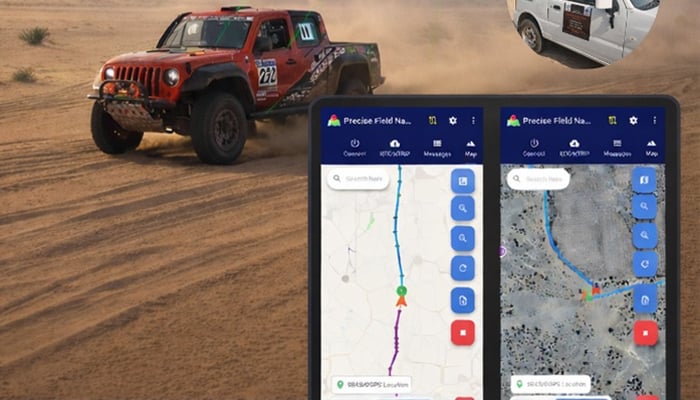
SUPARCO on Sunday introduced an advanced precision navigation system, Pak-SBAS, marking a significant development in Pakistan’s indigenous satellite-based positioning capabilities.
The system was formally tested during the high-intensity stages of the Cholistan Desert Rally 2026, according to the statement released in this regard.
Developed on the Satellite-Based Augmentation System (SBAS) concept, Pak-SBAS is designed to enhance the accuracy and reliability of Global Navigation Satellite Systems (GNSS).
Moreover, the device was trialled in the challenging terrain of Cholistan, where high speeds, shifting sand dunes, unpredictable tracks and minimal visual references demand exceptional navigational precision.
“The Pak-SBAS demonstrated enhanced positioning precision, improved route integrity, and stable signal performance throughout the rally stages,” the statement read, adding that by leveraging SBAS corrections, the navigation solution significantly reduced positional errors compared to conventional standalone GNSS systems.
It should be noted that this improvement provides rally drivers and navigation teams with greater confidence in route tracking, which is a critical element in competitive desert racing.
While the rally provided a real-world stress test, the implications of Pak-SBAS extend far beyond motorsports.
The system can enhance disaster management operations by enabling accurate tracking of rescue teams and affected areas during emergencies. In the transportation and logistics sector, it offers improved fleet management through precise vehicle positioning.
The Space & Upper Atmosphere Research Commission (SUPARCO) also noted potential applications in aviation navigation, where augmented satellite signals can contribute to safer flight operations.
In surveying and mapping, the technology is expected to reduce positional inaccuracies and project costs, making infrastructure development more efficient.
The commission described the launch as a step towards strengthening Pakistan’s technological self-reliance and improving public safety infrastructure through indigenous innovation.